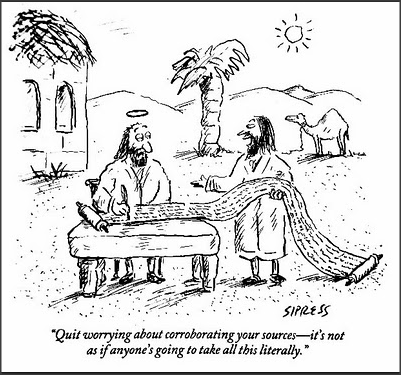
Tuesday, 10 October 2017

Gospel: Matthew 21: 28-32


Lawrence Kohlberg was an American psychologist best known for his theory of stages of moral development. He wanted to understand whether it existed a common and universal moral framework in the human mind and conscience that would make us capable to judge human behavior and decisions on a universal set of values. His question was: do our moral values are limited to a particular culture or is there a set of values universally valid for everyone no matter their cultural background? Fascinating question.
His hypothesis was that such set of universal values exist because as human beings we are all equal to one another and therefore those values can be found in any culture no matter the difference between them. For instance, he believed that justice was a value universally present in any culture. He also believed that any human being goes through the same stages of moral development, but He needed to prove that his hypothesis was correct so that he created a psychological instrument of analysis called “moral dilemma”. They are usually short stories where an individual faces a lethal riddle dilemma. There are just two options: one will lead to life and the other one to death. The reader has to decide which way the story will end through a set of questions.   
I’ll give you a small example. In Edinborough, a woman was near death from a special kind of cancer. There was one drug that the doctors thought might save her. It was a form of radium that a druggist in the same town had recently discovered. the drug was expensive to make, but the druggist was charging ten times what the drug cost him to make. He paid £400 for the radium and charged £4,000 for a small dose of the drug. The sick woman's husband, Oliver, went to everyone he knew to borrow the money and tried every legal means, but he could only get together about £2,000, which is half of what it cost. He told the druggist that his wife was dying, and asked him to sell it cheaper or let him pay later. But the druggist said, "No, I discovered the drug and I'm going to make money from it." So, having tried every legal means, Oliver gets desperate and considers breaking into the man's store to steal the drug for his wife. And then you would have to answer a series of questions that would help K. to understand what values guided you in making Oliver go one way or the other. Should Oliver steal the drug?
Why or why not? Does Oliver leave her wife die? Or does he steal the drug that would save her? What are stake here our two main human values: law and human life. Cleverly enough Kohlberg plays them one against the other forcing the reader to reveal not just his way of thinking, but also the values that guide his inner decision-making process.
We have just heard today a short riddle parable. Jesus asks one apparently obvious question to his audience, but in reality, it is an extremely challenging one and it looks very much like the sort of death and life dilemma that K. poses in his psychological stories. Where do we get that? Well, we may have to remind ourselves that a few verses before Jesus was directly questioned in his authority. The chief priests and the elders have just asked him what is the source of his authority? To which Jesus replies back by challenging their own authority in two different ways. Firstly, he  asks them about John the baptist: “Was his baptism coming from heaven, or was it of human origin? Brilliant question. Fearing the crowd, they reply: “I don’t know”. Secondly he tells them the very short story of two sons we have heard today. This time they don’t seem to feel directly accused of something, because Jesus poses them a rhetorical riddle question. They don’t feel call into question and answer, but that’s exactly what Jesus is doing. Let’ me remind you the riddle we have just heard: a man has two sons and asks both to go and work in his vineyard. The first one says “no” and then goes. The second one says “yes” but did not go. Jesus asks the chief priests and elders: “Which of the two did the will of his father?” They obviously reply: “The first”, not understanding by that they get caught by the riddle. In this amazing scene, we see Jesus in action. He passes from being questioned in his authority to shaking the foundations of the Jewish leaders’ power and authority. His words are a downward blow that gets to the heart of the establishment, the status quo, and make it miserably collapse. Jesus’ words is revolutionary because they destabilise the system and proclaim the coming of a new one: the kingdom of God, an inclusive and compassionate community of faith. The Jewish leaders could not stand that, because their authority was based on a exclusive idea of the people of God. Imagine now, how they took the words of Jesus saying that tax collectors and prostitutes were going to the kingdom of God ahead of them, the chosen ones! Not really well.  
Jesus’ message is also a destabilizing one because it tells the leaders of Israel that even their interpretation of the Scripture is wrong. They misinterpreted the prophets and, because of that, led the people of God to ruin.
The prophet Ezekiel -in the first reading- is actually accusing the leaders of Israel to distort and falsify the word of God. Why? Because God wants them to be compassionate toward the sinner who repents from his sins. Ezekiel’s words are extremely ironic: “And you have said: The way of the Lord is not right”. In other words, he says: “When I do what you want me to do, I’m right, but if I try to be a compassionate God, you then question my Word and action?” What do they want? They want the people who commit a sin or crime, to be punished according to the law. And we will agree with that. But Ezekiel’s question is more sublet that what we think, and Jesus takes on board two aspects of the same problem. Firstly, the final judgment of any human action is eventually referred to God and not to any human tribunal or individual and personal judgement. Secondly, that justice is a universal but not always straightforward measure of our human actions. Very often, we face serious human and spiritual dilemmas. How many times in history, human laws clashed against fundamental human rights? (The Apartheid laws in South Africa are just one example among many other ones).

Is it worth giving the sinner a second chance to repent and be good? The gospel asks us today. It looks like a simple question, but so hard to reply in practice in our daily life. The gospel is here to remind us the need for constant discernment. To our leaders we may have to require to be promoters of humanisation, to respect the law and do not put themselves above the law.

To ourselves, we may ask to feel the need to learn to forgive and be inclusive. Both being forgiving and inclusive are linked to each other and feed one another. Jesus tells us that we can always be more inclusive and forgiving that what we are.         

Wednesday, 20 September 2017

Anger and forgiveness

A young girl who was writing a paper for school came to her father and asked, "Dad, what is the difference between anger and exasperation?"
The father replied, "It is mostly a matter of degree. Let me show you what I mean."
With that the father went to the telephone and dialed a number at random. To the man who answered the phone, he said, "Hello, is Melvin there?"
The man answered, "There is no one living here named Melvin. Why don't you learn to look up numbers before you dial?".
"See," said the father to his daughter. "That man was not a bit happy with our call. He was probably very busy with something and we annoyed him. Now watch...."
The father dialed the number again. "Hello, is Melvin there?"asked the father.
"Now look here!" came the heated reply. "You just called this number and I told you that there is no Melvin here! You've got lot of guts calling again!" The receiver slammed down hard.
The father turned to his daughter and said, "You see, that was anger. Now I'll show you what exasperation means."
He dialed the same number, and when a violent voice roared, "Hello!"
The father calmly said, "Hello, this is Melvin. Have there been any calls for me?"
Anger and exasperation. At a first glance, today’s gospel seems to focus just on forgiveness. However, I would probably say that in order to understand what forgiveness means to us, we might have to take a step back and look more carefully at the role of anger and exasperation in our daily life. I’m sure you are aware of the many anger management classes that are out there and also of the films that are more making fun of it. Anger seems to be something that needs to be managed rather than understood. We take for granted that there are people with bad temper as a natural condition that has to be controlled in order to reduce the negative impact on their lives and the lives of those who are the object of their rage. Anger is just there. There is nothing you can do about it other than control it.
The biblical approach to this human passion is rather different. Anger is described as a foolish thing and linked to the sinner. How interesting! I say this because in more than one occasion in the Bible anger is seen as something good. Moses is furious when he comes down the mountain to find the Israelites worshiping a golden calf. Also, in the old testament God’s responses to Israel’s wrongdoing is very often anger. In the new testament, we all remember the famous scene of Jesus being angry at the merchants in the temple of Jerusalem. The question would be: “Is anger something good or bad? Unfortunately, there isn’t a straightforward answer. For instance, Jesus’ angry reaction to the merchants in the temple of Jerusalem looks more like an expression/reaction to injustice rather than a destructive expression of vice. So there is a good anger. The reality is that anger is something more complex that what we think. When we talk about the passion of anger we are not dealing with one simple emotion or a character trait but something more subtle and complex. It is something that it is not good or bad, but can be on some occasions excellent but on other occasions positively evil.
In his book “Healing Agony”, Stephen Cherry recounts of one time when conducting a parish retreat on the subject of forgiveness, he invited participants to list some of the different expressions that are commonly used to express the state of being angry. And they came up with the most interesting ones: ‘my blood boiled’, ‘I was spitting feathers’, ‘I was furious’, ‘she flew off the handle’, ‘I saw red’, ‘He went ape (or bananas), ‘she spat out her dummy’ and/or ‘threw all her toys out of the pram’. I’m sure you can add on other very colourful expressions. What striked Stephen Cherry more than their creativity is how much the participants enjoyed themselves. “They loved it -he says- there was real energy in the room. Anger then cannot just be described as an emotion. It’s more than that! It’s a cathartic emotion, because can have a cleansing and a healing effect; it can get something ‘out of the system’. See, very often we are tempted to airbrush Jesus’ or Paul’s anger out of the new testament, which would probably result in a distortion of their passion and personality. Anger seems to be integral to seeking God’s kingdom. Now there is certainly a danger involved in expressing our anger. I don’t know if you had that experience, but when I’m angry -especially when I witness a situation of injustice- I tend to feel strong and righteous, my defences drop and I become vulnerable. Anger threaten to boil into aggression before I can fully appreciate what is going on. Anger makes us focus on the present moment. We desire so intensely to deal with the cause of our irritation or harm that we forget the possibility of consequences -whether for the person to whom we are about the lash out at, or for ourselves. We say things that we normally would not dare to say. Paradoxically, anger connects with courage, but can be foolhardiness when pushed beyond certain limits of proportionality.
When anger crosses the threshold of proportionality it can become exasperation that could potentially lead to a desire of revenge.
When Peter asks Jesus: “Lord, how often must I forgive my brother if he wrongs me? As often as seven times?”, forgiveness is out of discussion. The point he makes is about exasperation. In other words, Peter is asking: “Is there a limit to my patience -especially when someone who I forgave keep repeating the same sin against me over and over again to the point of infuriating me? What do I do when someone gets me to the point of exasperation?” So the point is not the sin of the other person against me, but the anger that is provoked in me by the other person, which represents the real problem here. Anger management is then more about forgiving than managing our anger. Because when we forgive we have to overcome our anger which is appropriate, the anger which is an ‘intelligent’ response to injustice. Now we can really understand Jesus’ answer to Peter: “Not seven, I tell you, but seventy-seven times”, which means always. Anger cannot limit forgiveness because when we got to the point the exasperation that would mean just one thing: anger has become foolhardiness, recklessness, grudge and desire of revenge. The story of the king and his servants -we have just heard today- is about understanding and differentiating good from bad anger. The king is wise not because he is not angry, but because his anger is proportional to the debt of his servant. The servant’s anger, instead, is completely disproportionate in regard to his fellow servant’s debt. Cleverly enough, the gospel puts in both servants’ mouth exactly the same words when pleading for mercy: “Give me time and I will pay you”, highlighting that the king’s reaction is hugely different from the servant’s reaction.
We may have to bear in mind that anger is a pre-reflective reaction to a situation. A surge of adrenaline has been precipitated for some reason and we choose not to run or fly but to stand and fight. This makes anger an unreliable emotion. Just because I’m angry it doesn’t necessarily mean that someone has done something wrong, or that an injustice has been perpetrated. The gospel’s story is also suggesting a very good antidote to balance our anger, to learn how to read our anger and respond to the intuitions and perceptions that they carry and hold. The antidote is called empathy or what we commonly call “putting yourself in someone else’s shoes”.

“You wicked servant,” he said “I cancelled all that debt of yours when you appealed to me. Were you not bound, then, to have pity on your fellow servant just as I had pity on you?”

That’s what is Jesus’ story about: I can understand the good anger when I understand that the forgiving love that I receive from God is infinitely superior to the forgiving love that I give. God says to us: “how dare you being so angry at your brother when I restrained my anger toward you? God’s wisdom comes to us to recognise the bad anger, and at the same time being able to use the good anger and balance it with his wisdom, which will lead us to have a forgiving heart. A forgiving heart will always teach us that there are available other options than vengeance, hatred or bitterness.                             

Thursday, 24 August 2017

"For my house will be called a house of prayer for all the peoples”

Readings
Isaiah 56:1, 6-7
Romans 11:13-15, 29-32
Matthew 15:21-28

When I looked at Matthew’s gospel while preparing for today’s Sunday Eucharist, I had the impression that I have already heard similar stories somewhere else. Where? Oh yes,  in the book of Midrash, the jewish writings. I don’t know if you ever heard if it. So before explaining why today’s story of Jesus and the Canaanite woman looks very much like a Midrash, it’s worth saying what a Midrash is.  
In the Rabbis’ tradition a Midrash  is an interpretive act, seeking the answers to religious questions (both practical and theological) by plumbing the meaning of the words of the Torah. (In the Bible, the root d-r-sh is used to mean inquiring into any matter, including occasionally to seek out God’s word.) Midrash then responds to contemporary problems and crafts new stories, making connections between new Jewish realities and the unchanging biblical text, which in some type of Midrash would imply to ability of creating homilies and parables based on the text.
In this sense, Matthew’s story about Jesus and the Canaanite looks very much like a Midrash, a made up story to inquire a very important question and make connections between a new Christian reality and the biblical text. Now what was the question and what is the new reality connected to this text and perhaps the main reason of the question? Can a Canaanite, a foreigner, a pagan be part of the new Israel, the Christian community, if he/she hasn’t be part of the People of God, the old Israel? Foreigners who converted to Judaism were usually treated as a second class believers. So, how can they now become Jesus’ followers without previously been Israelites? This is the crucial question that Matthew’s gospel is trying to answer, which triggers a question about to whom Matthew is speaking to, and with whom he is engaging on this debate. It seems to me that the gospel talks to a community of people who converted from Judaism to Christianity and struggle to accept that non Jewish people can convert to Christian faith and be treated as equals to them. This is perhaps their problem: how anyone who didn’t belong to the chosen People of God can be treated the same way as us, the chosen ones? This is not a new question as we heard from the Book of Isaiah, but it is certainly a question that has been asked over and over through the history of the People of Israel, and has its grip on our current reality.
Isaiah is prophesying a time where “all who observe the sabbath, not profaning it, and cling to my covenant, these I will bring to my holy mountain. (...) For my house will be called a house of prayer for all the peoples”. Isaiah is actually predicting a future where ethnic identities and political, social and cultural differences won’t matter anymore, because God’s message will be universally equally heard by anyone anywhere. Are we there yet? Well, Isaiah’s prophecy sounds more like a idealistic utopia that never happened during Israel’s time and it is hard to see in our society. Strongly affirmed in theory and beautifully defined in International Declarations, it seems to clash with a reality of social tensions, hatred and divisions. For instance, what happened in Charlotteville a few days ago cannot be underestimated.   

Today’s gospel challenges us on a personal and community level asking the same question again and again. Imagine for a second then -instead of Tyre and Sidon, the cities mentioned in the gospel-  the text would you say Baghdad and Pyongyang? Just imagine that instead of a Canaanite woman, it would say a north Korean woman or Syrian nationalist (bearing in mind that this is just an example). A Jewish converted to the Christian faith would have hardly believed in the conversion of a Canaanite as well as we would probably be very skeptical about a North Korean or a Syrian nationalist converting to democracy after so many decades of Communist brainwashing or years of active terrorist violence. Now maybe this not too politically correct, but this comparison would help us to understand the impact that it would have probably generated in the early Christian community a story like the one we heard from today’s gospel. Like a stone thrown into a pond of still water, it would reverberate by generating so many circles of reflection and reactions into our congregation and local community as well. Jesus not only acknowledged the Canaanite’s faith, but also praised her faith and boldness. Fascinating! In that sense, the one who truly understood how revolutionary was Jesus’ message for the early Christian communities and the future of the whole Christianity is, without any doubt, St Paul. And he says it clearly in his letters. As a matter of fact, in the letter to the Romans, the one we heard today- he talks explicitly about the full inclusion of the Gentiles -meaning the non Jewish people- in God’s plans of salvation. Who are they? Usually, they are foreigners. What question is left to our reflection? Today’s gospel challenges us in our inner and, very often, psychological and sociological temptation of dividing the world, and our world in two main categories: in and out, insiders and outsiders, in-group and out-groups, and essentially us and them. This dualistic view of the world can really become an evil dynamic in our daily life, especially when we start making decisions based on these two categories. It is not just discrimination, it is more about the way it shapes our mindset and pushes us to pigeonhole people in certain boxes and being able to take control of the situation by labelling them. Think of what happened in Charlotteville: white supremacists against counter-demonstrators. This is quite common in the Church of England as well. And although I personally think that the diversity of traditions expressed in the UK is a more a sign of the richness of the Church than a sign of divisions, some people would perhaps see it a way of feeling less anxious about with whom I’m engaging with and who’s who. You are Anglo-Catholic, and he is Evangelical, but not conservative, and so on and so forth. The gospel will always challenge our mindsets and try to open our minds pushing us to the limits and beyond, to Tyre and Sidon, where a Canaanite -a foreigner, someone we already labelled and from whom we would expect the worst-  would surprise us showing a greater faith that any other faithful Israelite or Christian.                       

Thursday, 17 August 2017

Feast of the Blessed Virgin Mary (BVM)

As many English people and maybe some of you do, during summer time I tend to go with my family to warmer places than England. The choices are usually Italy or Spain. However, It has been awhile since the last time I have been in Italy or Spain on the date of the feast of the BVM, which is kept as a Solemnity in those countries despite the unbearable warmth.
I still recall one of those occasions when I was in Italy for the feast of the BVM and could picture in my mind people processing under the most inclement sun, sweating like pigs and hoping that the following year the vicar would make a shorter procession. Here in London our spring-ish summer allow us to take some time to pray and reflect on the beauty of the feast we celebrate today.
We heard a majestic and dramatic opening to this Feast by the Book of Revelation, which will inspire so many artists and result in the production of plenty of paintings and statues of the Blessed Virgin Mary depicted exactly as described in the first verse of today’s first reading: “A woman clothed with the sun, with the moon under her feet, and on her head a crown of twelve stars”.  
The scene we heard described in the Revelation foresees the great cosmic battle between Good and Evil, respectively represented by the Virgin who is about to give birth and the red dragon ready to devour the child to be born. In this vision the woman plays an absolutely central and crucial role in the history of salvation. Without her there would have been no salvation because she is the one who would give birth to the child “destined to rule all the nations with an iron rod”.
This is also the central message for the celebration of the feast of the Assumption of the Blessed Virgin Mary we receive from the Christian tradition. Already in earlier centuries, it was believed that Jesus glorified the body of his mother and took it to heaven making it similar to his and stressing the role of Mary in the history of salvation.
In many countries the Assumption is marked as a Holy Day of Obligation in the Roman Catholic Church and as a festival in the Anglican Communion. Eastern Orthodox and Eastern Catholics celebrate the Dormition of the Theotokos (the falling asleep of the Mother of God) on the same date. What we celebrate then is something that Christians have always believed since the early centuries: Jesus wanted to give a special recognition to her mother for her role in the history of salvation. Why is this celebration so important to us? There are certainly many reasons why we keep this feast, but one is particularly important: she is one of us, a human being with free will and capable to say “no” to God and turn down his plans of saving the world from destruction. The beauty of Mary lies in her freedom, through which she chooses to be the Mother of God, the Theotokos. She chooses to say “yes”. This is the beautiful truth we celebrate today.
There are some beautiful paintings like the one by the Renaissance artist Leonardo Da Vinci who very boldly described the annunciation as a declaration of love: a noble man proposing to a princess. This is the interpretation that some experts actually make of the renowned painting. If we could translate this into the original theological meaning of the biblical text, we would perhaps say that it is God who proposes to Mary through his messenger. Fascinating! How beautiful is a God with an expectant look towards Mary hoping to receive a “Yes” like a lover proposing to his beloved and expecting to be accepted. It is such a moving and profound image of the encounter between God and Mary. On that “Yes” will depend the destiny of the whole history of salvation. This is also what we celebrate today: Mary’s yes to God’s plan of salvation for the whole humanity. Let’s avoid the temptation to take her “yes” as a line of a script already written for her. This is not acting! We may have to understand that she could have said “no” to God, which makes her even grander to the eyes of the world. She didn’t, she said “Yes” and it all begun.
This feast of the BVM, then, is so important to us because it sets us into the right perspective in our daily Christian life. Like Mary we can always say “no” to God’s plan of salvation for our life and the life of the people who live with us, and the community we live in. We can turn him down by not listening to his voice or simply doing the opposite of what he asks us to do, or even worse by ignoring him. Mary reminds us the beauty and terrible responsibility of being human and endowed with free will. We are not machines, we are not determined to say necessarily “yes”. Sometimes, we don’t realise the consequences of saying “no” to God and the impact of it in somebody else’s life. However, it is absolutely true that we have been created as free beings and endowed with free will. It is not very hard to find evidence of that! By looking to what happens around us and in the world we will dramatically realise how many “Nos” are said to God’s plans and “Yes” to violence and death, and essentially evil. What happened in Nigeria where at least 11 people were killed in an attack on a Catholic church service in southern Nigeria last Sunday, is just one of the many examples of that.    
In Mary we celebrate the exaltation of human freedom before God, our creator who made us 100% free as well as its powerful responsibility. Like Mary we take part in the cosmic fight against evil. The red dragon is still here. It’s not gone just because we don’t talk about it. At the same time, we know that evil has already lost the battle, because the Virgin gave birth to the Child who will save the world. With Mary we sing the Magnificat, which is the exaltation of her and our magnificent freedom. A freedom that made her and us part of God’s plan, glorifying the humble and the weak and scattering the proud in their conceit.

How beautiful is the encounter between Mary and Elizabeth, so full of biblical echo and accomplished prophecy.  It also shows us that the exaltation of Mary is a symbol of human and godly fruitfulness. When God’s will meets human freedom, there will always be love, which for us will mean to be the Son of God, the child destined to be the savior of the world. With Mary we say “Yes” to life, to love, to beauty, to holiness and justice despite the death, hatred, ugliness, secularism and injustice we see in our society and this world.

Wednesday, 9 August 2017

How does the kingdom of God look like?

A new vicar in a small town in Gloucester spent the first four days making personal visits to each of the members of his Congregation, inviting them to come to his first service.
The following Sunday, the church was all but empty. Accordingly, the vicar placed a notice in the local newspapers, stating that because the church was dead, it is everyone’s duty to give it a decent Christian burial. The funeral would be held the following Sunday afternoon, the notice stated.
Morbidly curious, a large crowd turned out for the “funeral.” In front of the pulpit, they saw a closed coffin, smothered with flowers. After the vicar delivered the eulogy, he opened the coffin and invited his congregation to come forward and pay their final respects to their dead church.
Filled with curiosity as to what would represent the corpse of a “dead church”, all the people lined up to look into the coffin. Each “mourner” peeped into the coffin then quickly turned away with a guilty, sheepish look.
In the coffin, tilted at the correct angle, was a large mirror!

Why does Jesus speak in parables?

From a teaching point of view, it doesn’t make any sense. We heard a parable that wasn’t even understood by his own disciples. They actually come to him in puzzlement and ask him: “Why do you speak to them in parables?” In other words, they are asking: “Why would someone speak in a way that is unintelligible to his audience?” It sounds rather confusing and amazingly contradictory.  Can you imagine a teacher who would teach maths in the most possible cryptic way in order to confuse his students instead of leading them to a better comprehension of it. His main task would be to make simple what it is complicated, not the other way around. It sounds rather ridiculous to our ears and very much against the common sense.

Now what if, as a scientist would do, I’m trying to explain the origin of the entire universe but don’t have the vocabulary for it. Stephen Hawking, for instance, is a very good example of that. The theory of the black holes was something he had in mind, his original intuition. Unfortunately nobody thought of it before, so that he had to make up concepts and images to explain something new, something that no one never thought of before. He had to make up words and invent a new vocabulary for it in order to make sense to other people of something extraordinary new. What He was trying to say would actually represent what in science they may call a paradigm shift, and we may call a revolutionary change -in more simple words.

Why then Jesus speaks in parables? Because what he proclaims is the kingdom of God. How does the kingdom of God look like? That’s his question. He knows that the kingdom of God He announces is more than good teaching or a set of wise advices about how to be a good person. It contains a new ethos, but it actually overcomes all that has been said before about it. The truth Jesus wants us to receive is hugely bigger that our human understanding and capacity of comprehension. And this is perhaps why he uses parables. Through parables he gives us a hint into what and how the kingdom of God looks like.  It’s God’s visions what Jesus longs to transmit to us, but he feels that lack of vocabulary for it, not just to describe it, but to communicate it as a whole. Just think, for example, of the series of short parables and images that Jesus uses to give us glimpses of the kingdom of God.

The kingdom of God is like a mustard seed. The kingdom of God is like a yeast, or like a treasure hidden in a field, like a merchant in search of fine pearls, like a net thrown into the sea ad caught fish of every kind. They are amazing parables and imagines of the kingdom of God, but never quite define it completely.
The kingdom of God is like…

Today we heard the parable of sower, a powerful parable. Jesus seems to look at the world as a limitless field and tells us God’s sowing of his word would impact and transform our lives according to our responses to it.
If the kingdom of God is a revolutionary change brought to our lives, then it is transformative change that would be very much about a new way of living our lives. It would include a vision of the world as well as an ethos that would change our way of being a community and reshape our lives. It would a way of finding meaning and a place in this world, and essentially of learning how to be the family of God and brothers and sisters to each other. This is perhaps the revolutionary change Jesus talks about through the parable of the sower. Jesus brings to us a new sense of brotherhood.
Now where do I get that from this parable? For each thing Jesus says it always good to look at the context in which his parables happen to be said. Just a few verses before Jesus tells us this parable, something happened. His mother and his brothers are standing outside, wanting to speak to him. And when someone, tells him about them, he replies quite harshly: “Here are my mother and brothers! For whoever does the will of my Father in heaven is my brother and sister and mother”. Is is actually rejecting his mother, or refusing to recognize his own family? No, He takes advantage of the situation to give us a glimpse of how the kingdom of God looks like, and tells us the parable of the sower.  
Interestingly this parable challenges its audience on a life/death level. It doesn’t seem to be a middle ground for the sowing of God’s word: it rather bears fruit or dies. Also, we realise how provocative was Jesus’ way of proclaiming the gospel. The gospel actually ends up with: “Let anyone with ears to hear listen!” The parable of the sower challenges us on a very deep level: “Do we preach and witness a gospel of good manners and good behavior as the highest values of our community or we provocatively live according to Jesus’ revolutionary message of love for the enemy, forgiveness and solidarity towards the poor and the needy?” When we look at our Church and Congregation, and Local community do we see a coffin with a dead church in it or a sign of the kingdom of God in living worship and action? In our life’s blueprint -as Martin Luther King would call it- do we wager our lives on money, power success or have a solid commitment to beauty, love and justice?         


Friday, 14 July 2017

Jesus’ auscultation

Readings
1 Samuel 28:3-19
Lukes 18:35 -19:10


Reading this brief story about king Saul and his desperate attempt to regain God’s support using a medium as a last resort to consult the spirit of Samuel, is like watching the 5th season of House of Cards or the Game of Thrones without having ever watched the previous seasons: you basically won’t have a clue about what’s going on, who is who, and why is doing what is doing!


The books of Samuel, originally one book, can very much be described like a great saga or a glorious trilogy in three episodes. Episode 1 -the shortest- is about Samuel, the great judge, who refuses to be king and struggles to keep Israel faithful to Yahweh. Episode 2 is about king Saul, who symbolically represents the beginning of a stable monarchy, but fails to be a good king. Episode 3 is the story of David, the rise of the great king of Israel. The more you read, the more you realise that both books of Samuel are very much about the saga of King David. He is the hero to rival any other. From the very beginning it is very clear that he is the one, while Saul appears like a small-minded person, full of jealousy and envy toward David who even when gets the chance to kill Saul refuses the lay his hands on him. In the saga of King David there are all the elements that would make this story a great series of films: treachery, hatred and love, friendship and jealousy, power, great fights and battles. The difference between the Saga of King David and, let’s say Game of Thrones, is that in the biblical narrative God always plays a central role while in the novel that inspired the Tv series God is completely absent and plays no role in people’s lives.  
When we meet Saul today, he has already attempted to kill David who has to flee and find refuge with the Philistines, the abhorrent enemies of Israel. Saul feels lost. The reader can get a hint of what is about to happen because God is not with Saul any more. Saul will fall in order for David to rise and be king. When Saul goes to consult the medium, we are at the vigil of a great battle and, from what the story says, we know that the king of Israel doesn’t know what to do. He is afraid, and God is not with him. He is blind and even the spirit of Samuel invoked by the medium confirms that he is doomed to die because God turned away from him. Now how are David and Jesus related to each other? There are two story in Luke’s gospel that may help us understand the connection: the stories of Bartimaeus and  Zacchaeus.
Firstly, the blind man of the gospel of Luke calls Jesus Son of David, which was certainly one of his titles among others, like Son of Man, but it has a special connotation when referred to Jesus. Secondly if you remember, at the very the beginning of Matthew’s gospel we find the genealogy of Jesus the Messiah -that very boring list of names (Abraham was the father of Isaac, and Isaac the father of Jacob, etc.)- which tries exactly to proof this point: Jesus was of the lineage of king David so that the history of salvation would come without interruption from Abraham to David and finally to Jesus.


Also, what’s fascinating about the saga of king David is that it shows us that the history of salvation is deeply mingled with our human history and our humanity as well as it is for Jesus, true man and true God. What the books of Samuel relate is God’s constant involvement in the history of his people, and his redeeming love always in action. Lukes’ stories of the blind man and Zacchaeus shows the same compassionate love for the people Jesus meets. In that sense, there is no difference between the God of the Old Testament and the God of the New Testament. What really seems to be distinctive is Jesus’ approach. In the great saga of king David we are still talking about kings and essentially powerful people. God seems to work more on macro level in the Old Testament, while in the New Testament Jesus is among people and relate to them as equal. Think of the story of the blind man. We don’t even know his name. He is a man of the street, a beggar. Zacchaeus, instead, is a more important character because he is a chief tax-collector, but still not a king or chief commander of an army. Jesus has a personal approach as well. Even if you know that they meet in the middle of the street or in the temple among hundreds of people, you feel like they are having a one to one encounter. And certainly a transformative one.
Let’s have a closer look at these two men.   
   
They have something in common: both of them can’t see Jesus. One because of his blindness, and the other because he is short. They certainly come from very different social status: one is a beggar, the other is a rich man. And perhaps what the gospel is suggesting is that they represent symbolically two different but complementary types of discipleship. The blind man, once healed, will actively follow Jesus along the street of Jerusalem, while Zacchaeus after converting to Jesus, will work to re-establish himself as part of the renewed Israel right where he is. Different calls and rather distinctive vocations, but the same personal encounter with Jesus.
Their physical condition becomes  the symbol of their spiritual situation: something is stopping them to see the Lord. We may call it sin, but in the case of the blind man is not entirely clear that is his sin the cause of his blindness. In Zacchaeus, instead, we can easily identify the most despicable people in Israel: the tax-collectors.  However, he knows his condition. He acknowledges to be a professional thief despised by his own people as soon as he makes a public declaration to give half of his possession to the poor and pay back four times to all those he defrauded.
Again, the blind man and Zacchaeus are not the focus, but Jesus is. There is no moral judgment in his attitude toward them. To the blind man he asks: “What do you want from me?” Zacchaeus must have been very surprised that Jesus knew his name. And he simply says: “Hurry up because I’m staying at your house today”. That was enough for him. We don’t know what they talked during the time Jesus was with Zaccheus in his house, and would probably never know. What we know is that they met and the outcome of meeting Jesus is Zacchaeus’ marvelous conversion.


Very often when we look at the world as it is, we may be tempted to feel despondent and discouraged because of the violence and hatred we see in it every day. The selfishness and narcissism are big idols of our society. There is always a big moralistic temptation in our look to the world. Sometimes it is very subtle, but it is there.


The books of Samuel perhaps remind us that human history is deeply mingled with God’s history and any attempt of separating them would probably end up generating big monsters. Lastly I feel that our call is to enable people to meet Jesus, to help them removing the obstacles that prevent them to meet him. This is why sharing our experience of faith is so important, we learn by listening to each other. From Jesus we don’t just listen to what they say, but to their hearts, which may be called auscultation.  In medical terms auscultation is the action of listening to sounds from the heart, lungs, or other organs, typically with a stethoscope, as a part of medical diagnosis, but in spiritual terms is the art of listening to people’s lives, feelings, emotions and stories from the heart.  

The conversion of the blind man and Zacchaeus is the result of Jesus’ listening to them or -as we may call it- of Jesus’ auscultation. Because Jesus listened to them this way, they felt loved and ready to let him in and transform their lives. We are witnesses, not judges. Witnesses of this love.

Thursday, 6 July 2017

Last Thursday I went to the one of the events of the Bedford Park Festival, a very entertaining and funny one, I have to say. It was called the Tome of the Unknown Actor with Christine Ozanne (writer and sit-com actress) and director Patrick Tucker, who talked about the secrets of the acting profession. Apart from being both very funny, there was something that Patrick Tucker said that was very illuminating for me. He asked the audience: “What is the difference between acting on stage and on Tv?” Someone replied back saying: “On stage actors have to project their voices, while on Tv they don’t”. Tucker then said: “Thank you. It was a nice try, but unfortunately the wrong answer”, and went on explaining why.
According to his experience, the main difference between Tv and on stage acting is the screen that effectively changed it all. On stage acting is fundamentally about exaggerating the reality, but not changing it, while the screen requires a complete alteration of the reality, when very often acting on screen forces actors to a very unnatural acting. For this reason, acting on Tv is full of lies and cheats, Tucker says. What you see in not what it is, but it looks great on screen, and that’s why they keep doing like that. The truth is a distraction and, therefore needs to be avoided, because it would probably take the attention of audience away from the story, which is what they want you to follow. I found this very intriguing. Now stay with me while I’m walking you through my reflection on today’s gospel and keep this in mind while you are listening to me.   


As you may already noticed, this year we read the Gospel of Matthew. He is the evangelist who tells us about the Gospel of the Church. What we usually know about the four gospels is that the first three -Mark, Luke and Matthew- are essentially the same, while John’s gospel is different, very rich and profound in its theological meaning, but rather difficult to be interpreted and understood. You can then read Mark, Luke and Matthew from the beginning to the end and in parallel. This is why they are called “synoptics”, which literally means “in one view”, because they include many of the same stories, often in a similar sequence and in similar wording. They stand in contrast to John, whose content is comparatively distinct. You can actually place them in three columns on the same sheet and read them simultaneously without losing sight of Jesus’ story, and at the same time compare the differences.


It is true then. At a first glance they seem to tell the same story and follow the same narrative. However, especially Luke and Matthew, lay emphasis on two different but complementary experiences of who is Jesus and what  relationship he has with the church. For instance, Luke makes it clear at the end of the gospel that the Ascension is the event that marks the end of the “time of Jesus” as a human being on earth, and, almost simultaneously, the beginning of the “time of the Church” with the outpouring of the Holy Spirit on Pentecost. For Luke the Ascension symbolises a breakthrough: there is a before and an after Jesus’ time,  while for Matthew there is no discontinuity. The risen Jesus remains rather than going away. There doesn’t seem to be a farewell in Matthew gospel. In Matthew’s mind then the Lord Jesus abides with his Church “to the end of the age”.
Also, Matthew alone of the Gospels uses the term ‘church’. It does not really refer to the universal Church, but rather to the local Congregation of Christians. Therefore, from Matthew’s perspective and experience as evangelist to his community, Jesus, the risen Jesus is in the midst of those who are the church and walk them along their journey to become the Church. He is with them when they rejoice and also with them when they suffer. In the light of it, we can understand that this is the church that is suffering because of persecution and to which Jesus is talking to in Today’s gospel. “Do not be afraid”, says Jesus, “because I’m with you”.


It is a powerful message that has a tremendous echo in Jeremiah’s experience of persecution as well. If you heard the story of Jeremiah, you would know that it ends really badly. His prophecy is not heard at all by the people of Israel. He preaches the destruction of Jerusalem, and more the once is persecuted, arrested, thrown in an abandoned tank in the middle of no-where, and eventually dies stoned by his fellow country men. In hindsight this is the man who we almost immediately identify with Jesus as an image of him in his experience of prophecy and suffering. But he is also the man, who in the middle of the most nagging persecution, is able to say: “But the Lord is at my side, a mighty hero; my opponents will stumble, mastered, confounded by their failure”.  


It requires a strong dose of faith and stamina to say something like that when there is no immediately apparent proof of God’s support. What he was saying was true to him, but nobody else. Paraphrasing Jeremiah, we would probably ask: “How can we sing to the Lord, praise him and believe that he has delivered the soul of the needy from the hands of evil men, when what our eyes show us on a daily basis is quite the opposite?” It is really hard to believe it.


I don’t know about you, but from time to time my faith crashes against a wall of indifference, violence, and a huge idol of selfishness. My beliefs are at stake when the violence that surrounds me touches the most vulnerable people, wound them and leave them without any hope.
How do I answer the question from the people on the street about suffering, hatred and resentment that seem to overtake us?


My only answer lie on Jesus’ words: “Do not be afraid”.
What it is absolutely fascinating about today’s gospel is that does not answer the question of why we suffer or why Christians are persecuted, or innocent people die, but it rather offer a method to help us to deal with all that. Instead of telling the truth that should lie -at least according to our human logic- behind the suffering, violence and persecution, it show us how to get to the truth.


Think of the efforts we make to understand the violence behind the recent terrorist attacks in Manchester, London Bridge and now Finsbury Park, try to give some explanation to tragedy of the Grenfell Tower, but the truth is that we don’t know what to say and what to believe.
Influenced by our modern culture and literally inundated by real time news and information, we seem to know the truth or have the ability to get to know it. However, based on what director Tucker says about the Tv screen we must probably be bewildered, confused and suspect about what is true and what is false. Sometime the truth seem to be completely made up.
From the gospel, all we know is that “For everything that is now covered will be uncovered, and everything now hidden will be made clear”. What that means? Is it talking about discovering the truth or something else? This is perhaps more about our Christian method. The gospel is the way or the method, which actually means “the way”, or the “how”. It seems to be rather disappointing. I know what you are thinking: “All my life I have been told that the gospel is the truth, and now you are saying all I have got is “the way”? Now think for a moment of your experience of faith, go back in time to your childhood, and then your youth. Let your memories flow. Was your faith and love for the Church an idea you read in a book, listened in the news? Was it a fascinating theory about the world? Or maybe, it was something more related to the people you met, your dad and mum’s experience, your friends and community what really transmitted your faith to you? What do you really remember if not a story, a song, a hymn, a tune, words and people. Faith does not seem to come into our lives as a free-floating content. As Eugene H. Peterson would say: “Everything we know about God and are passionate about the church is always embedded in a form of some kind”.
Today’s gospel tells us that how we learn something is more influential that the something that we learn. Jesus tells us today: “Don’t be afraid, I’m with you”, in the hardest and darkest time of your lives. He shows us the way, but we may have to walk along his path and trust him.
Where do we find him? In the church -as Matthew says- our Christian community, the space where we shape our faith primarily through the Eucharist, and the proclamation of the Gospel, our worship and our solidarity towards each other -like we wonderfully did, and many people keep doing with the victims of Grenfell Tower Fire and their families.   

With Matthew we preach the gospel of the Church, the symbol of our values, tradition and religious and social commitment to our local community. He tells us the way, and even more, he is the way, and because of that we have faith that he will lead us to the truth. There are no tricks, no lies, no screen cheats in him, but the way to the truth. “Don’t be afraid, I’m with you”.